


The Koi is not merely an ornamental inhabitant of Zen gardens; it is a biological metaphor for the human spirit’s capacity for metamorphosis. Rooted in ancient Eastern cosmologies, the Koi represents the bridge between the mundane struggle of the “bottom feeder” and the celestial sovereignty of the “Dragon.” In a modern world of rapid digital change, the Koi serves as a silent teacher of “grit,” teaching us that persistent effort against the current is the primary requirement for spiritual and material alchemy.
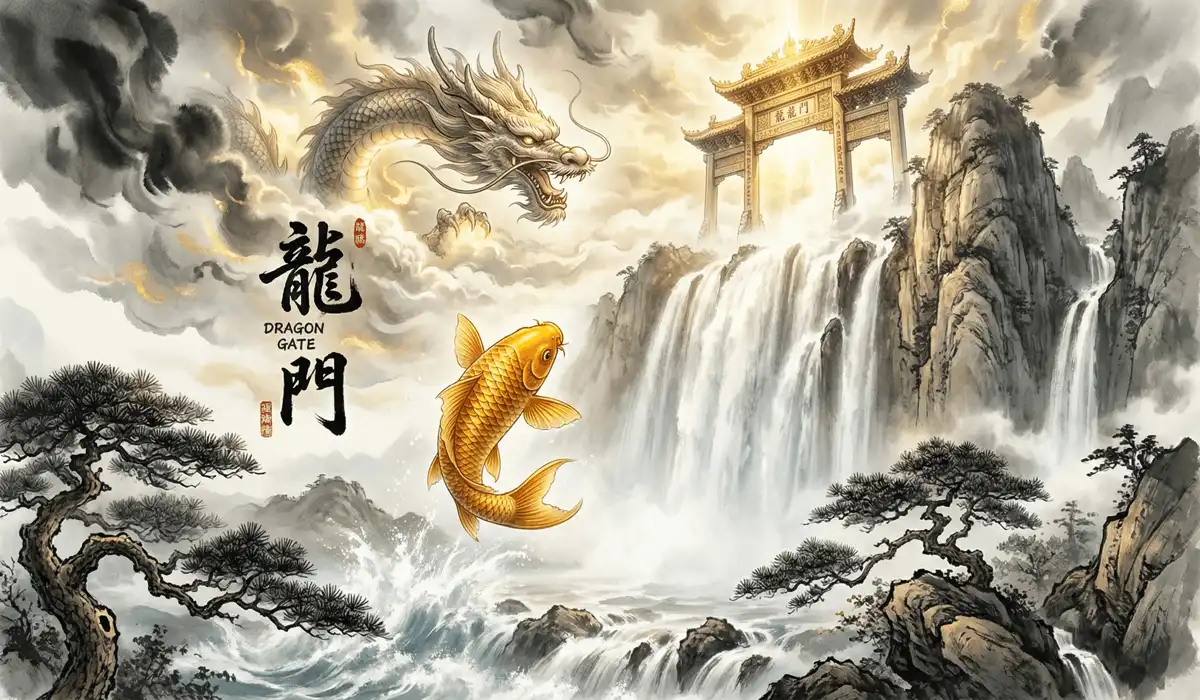
Quick Answer: In Feng Shui, the Koi Fish is the ultimate symbol of perseverance, transformation, and imminent success. Representing the “Dragon Gate” legend, it signifies that through undying effort, one can transmute life’s obstacles into massive wealth, career advancement, and spiritual authority.
Ancient Origins and Sacred Legends: The Birth of a Symbol
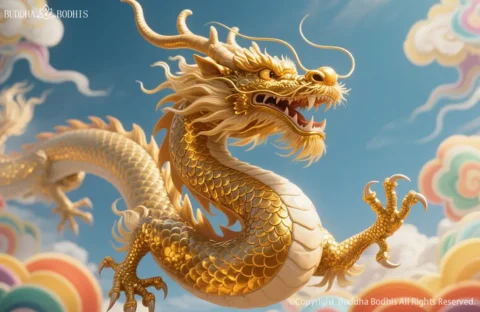
Deeply embedded in Chinese Folklore, the story tells of a golden Koi that swam against the forceful current of the Yellow River for 100 years. While other fish turned back, the Koi leaped over the towering waterfall at the mountain’s peak, impressing the gods who transformed it into a celestial Dragon. This myth establishes the Koi as a symbol of “Metamorphic Resilience”—the ability to change one’s fundamental nature through sheer willpower.
The Roots in Taoism and Zen Buddhism
Taoist philosophy teaches that the Koi represents the flow of “Chi” (life force) and the balance of Wu Wei. This involves knowing when to exert effort and when to move with the water’s natural intelligence. In Wikipedia entries on Eastern thought, the fish is often cited as a prime example of living in harmony with nature.
In Zen Buddhism, the Koi is a meditation on presence. Its fluid movement represents a mind that is focused, calm, and undisturbed by the external “currents” of desire or distraction. This historical usage is tied to the concept of “surplus,” as the word for fish is a homophone for abundance in ancient linguistics.
The Hidden Philosophy: Decoding the Koi’s Symbolic Anatomy
The Koi represents the “Alchemical Shift,” where the “Lead” of mundane struggle is turned into the “Gold” of material and spiritual sovereignty. Unlike the Arowana, which represents “Easy Wealth,” the Koi represents “Earned Prosperity” that is stable, karmically sound, and enduring. This distinction is vital for those seeking long-term financial health and personal growth.
The overlapping scales of the Koi are often compared to armor, symbolizing the “Protection” of one’s assets and energy from negative external forces known as “Sha Chi (煞气).” Upstream swimming represents an active pursuit of a goal or the overcoming of a current crisis. Downstream swimming represents the “Peace of Achievement,” showing that the goal has been met and the individual is now integrated with the Tao.
The Yin Yang Fish Balance
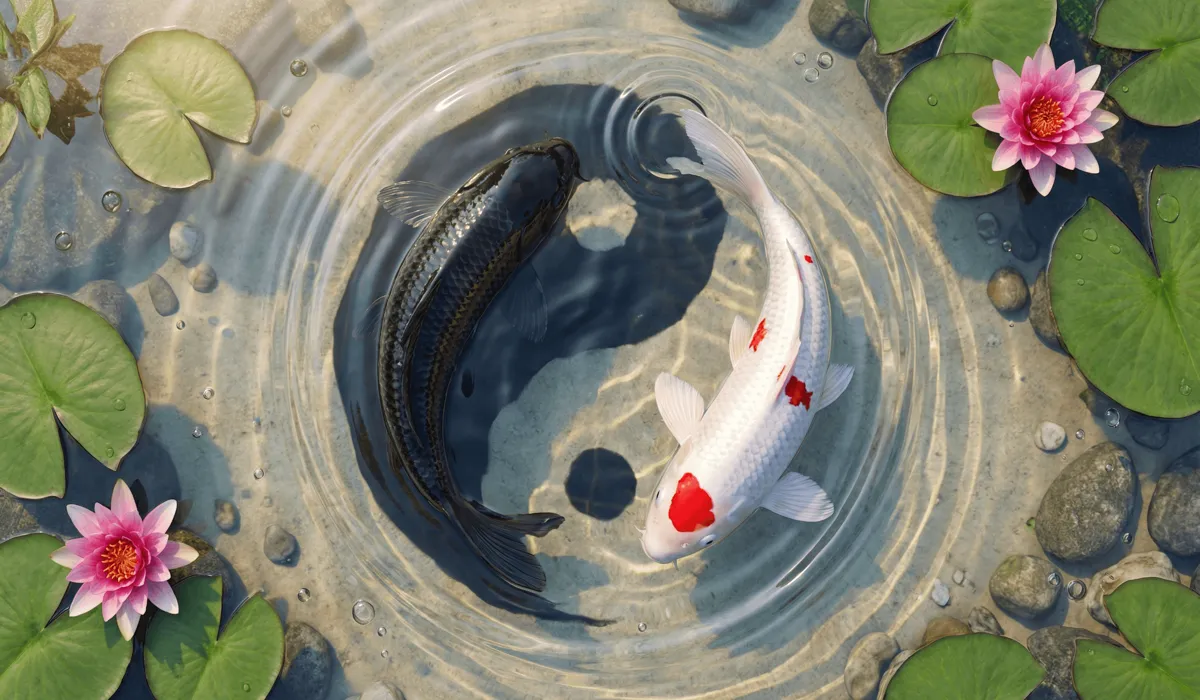
The Taijitu (Yin Yang symbol) is traditionally visualized as two Koi—one black, one white—circling each other in eternal harmony. This pairing represents the non-duality of existence, where masculine and feminine energies work in perfect synchronization. Understanding this balance is key to achieving a high-stress lifestyle that remains productive yet peaceful.
We can look at Encyclopaedia Britannica to find how these symbols have influenced art and culture for centuries. The circular motion suggests that wealth and wisdom must flow together to remain healthy. Without balance, energy becomes stagnant and prosperity fades away.
Cultural Evolution: Eastern vs. Western Interpretations
In China and Japan, the Koi is the symbol of the “High Achiever.” It was historically associated with the Imperial Examinations, where students sought to “leap the gate” into civil service. It remains a symbol of family lineage and the “longevity” of a business empire that lasts for generations.
In the West, Koi symbolism has evolved toward “personal transformation” and “non-conformity.” It is often embraced by those “swimming against the tide” of societal expectations to find their authentic self. Modern architecture uses Koi imagery to bring “Water Element Flow” into urban environments, mitigating the “stagnant energy” of concrete spaces.
Key Insight: The Koi is a bridge between worlds. It connects the physical need for wealth with the spiritual need for growth, making it a “Universal Anchor” for those navigating the complexities of modern life.
Wearing the Talisman: Why Koi Fish Jewelry Matters Today
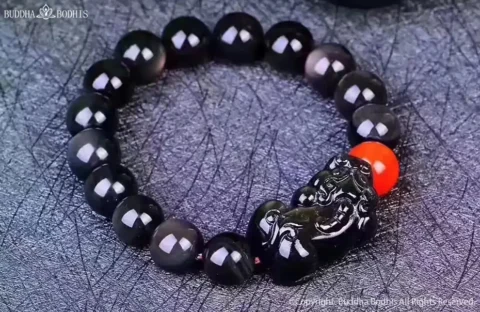
Wearing Koi Fish Jewelry serves as a somatic reminder to the wearer. It tells the subconscious: “I have the grit to transform my current situation.” In an era of digital burnout, the symbol acts as a visual “off-switch” for stress, grounding the wearer in rhythmic persistence.
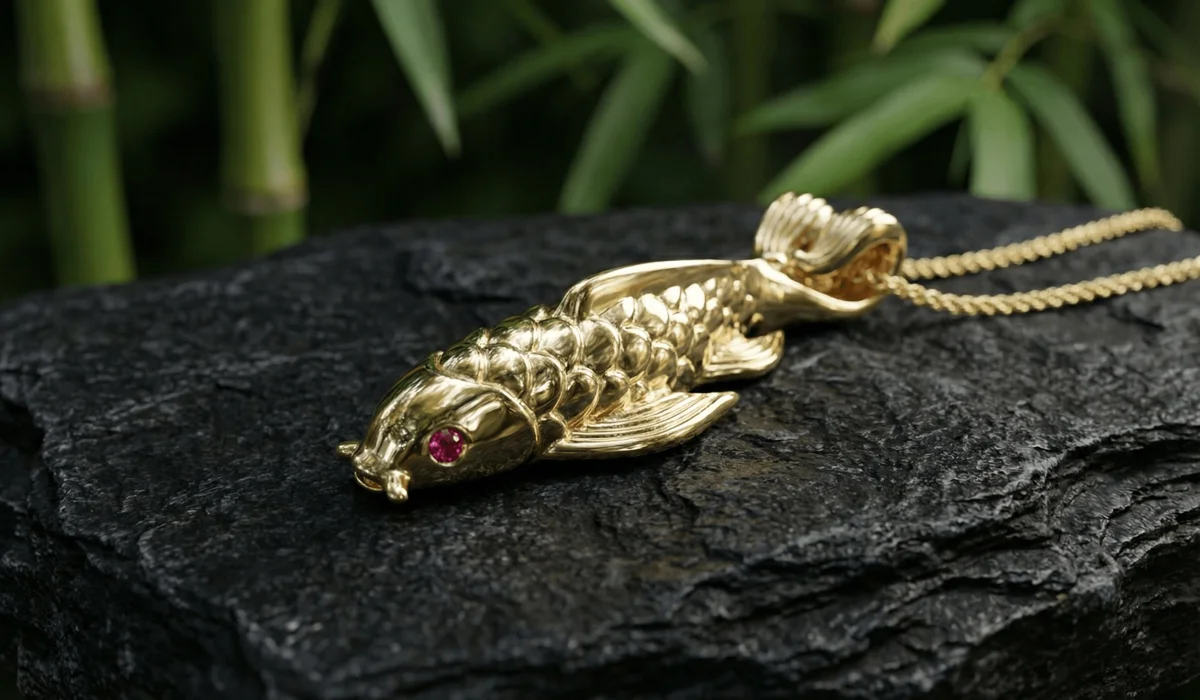
Black Koi motifs in jewelry are specifically used for “Energy Protection.” They help in absorbing negative vibes or office politics before they reach the wearer’s core. Golden Koi motifs function as a “Wealth Magnet,” aligning the wearer’s personal frequency with the current “Period 9” transition toward fame and liquid wealth.
The Psychological Anchor for Resilience
Jewelry does more than just look good; it functions through “Enclothed Cognition.” This means the pieces we wear influence our psychological processes and performance. By keeping a symbol of the “Dragon-potential” close to the skin, we reinforce a growth mindset every single day.
For those interested in the timing of these energies, you can check the Feng Shui Forecast for the coming years. Aligning your jewelry choices with the annual elemental shifts can enhance the protective and attractive qualities of the Koi symbol. It creates a powerful synergy between personal intent and cosmic timing.
Ritual and Practice: How to Meditate with the Koi Symbol
To perform the “Dragon Gate” visualization, sit in a quiet space and visualize a golden Koi at the base of your spine. As you breathe in, imagine the fish swimming up the “waterfall” of your spinal column toward the crown. On the exhale, visualize the fish transforming into a Dragon at the top, radiating golden light to boost career energy.
Following the “S-curve” movement of a Koi with your eyes while breathing rhythmically helps synchronize the brain’s hemispheres. This practice is excellent for digital nomads who need to maintain focus in distracting environments. Placing a Koi symbol in the “Northeast Sector” of a home office can further enhance this concentration.
Cultural Etiquette and Taboos: Respecting the Symbol
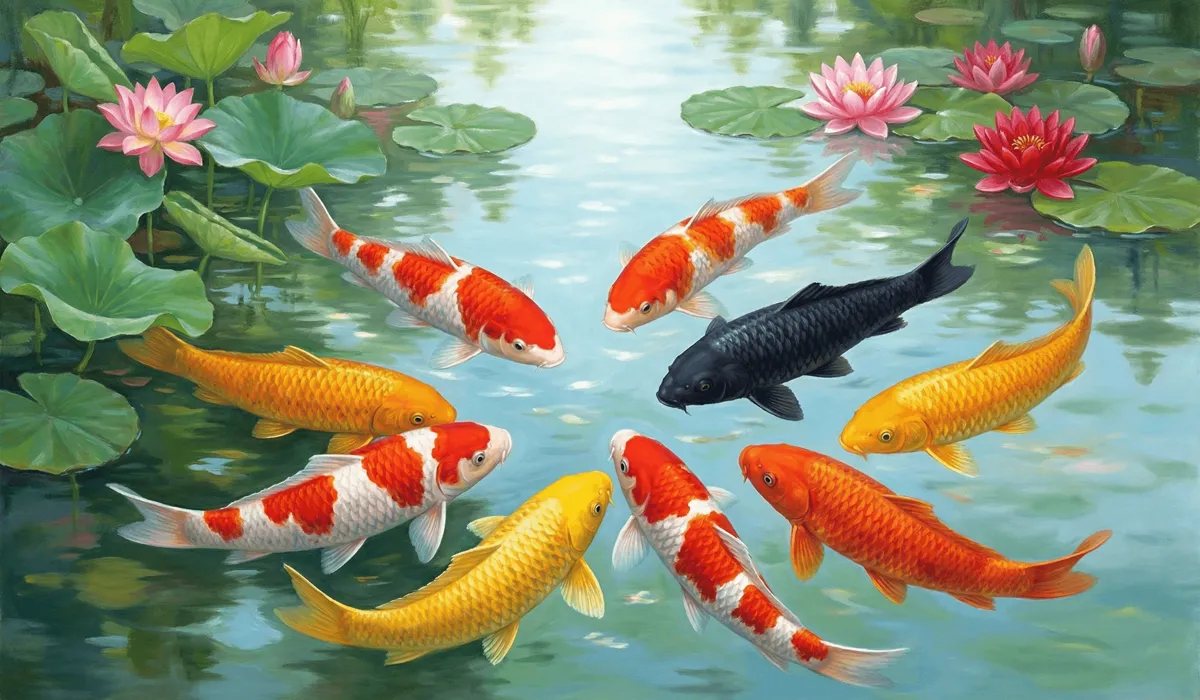
In Feng Shui tradition, the most auspicious configuration is nine Koi. This usually consists of eight gold or red fish for prosperity and one black fish to absorb “Sha Chi.” This “Rule of Nine” ensures that wealth is not only attracted but also protected from loss or negative influences.
Avoid placing Koi symbols in bathrooms or laundry rooms. The flowing water in these areas symbolizes wealth being “washed away,” which contradicts the goal of accumulation. It is also important to note that caring for living Koi creates a “Karmic Bond” of stewardship that requires great effort.
Comparison of Koi Colors and Meanings
We have compiled a table to help you choose the right energy for your specific needs.
| Koi Color | Cultural Name | Primary Benefit | Element Alignment |
|---|---|---|---|
| Gold / Yellow | Yamabuki Ogon | Wealth and Prosperity | Metal / Earth |
| Red and White | Kohaku | Career Success | Fire / Metal |
| Black | Karasu / Kumonryu | Energy Protection | Water |
| Silver | Ginrin | Business Longevity | Metal |
If you cannot maintain a pond, high-quality jewelry is often a “cleaner” energetic remedy. This allows you to carry the symbol without the risk of creating stagnant water energy. You can explore various Spiritual Meaning Guides to see how the fish interacts with your specific zodiac sign.
The Numerology of Abundance
The number nine represents “Fullness” and “Heaven” in many Eastern cultures. When applied to Koi, it signifies a complete cycle of growth and the permanence of one’s riches. This is why the Feng Shui Society often recommends specific counts for aquarium or pond setups to maximize harmony.
Having eight bright fish and one dark one creates a defensive perimeter for your luck. The eight fish swim together to bring in the “Chi,” while the single black fish stands guard. This setup is considered the gold standard for business owners and heads of households seeking stability.
Pro Tip: If you are using artwork instead of live fish, ensure the image depicts the fish in a state of vigorous movement. Stagnant-looking fish in art can lead to stagnant finances.
We recommend updating your symbolic placements during the Lunar New Year to keep the energy fresh. This simple act of “clearing the path” for the Koi helps maintain the momentum of your personal transformation throughout the year.
Follow these steps to integrate the Koi symbol into your daily life:
- ☸️ Mindful Visualization: Spend five minutes each morning picturing your goals as the Dragon Gate.
- 🕉️ Set Daily Intentions: Touch your Koi jewelry and state one specific financial or career goal.
- 🧿 Strategic Placement: Move a Koi image to your Southeast wealth corner to activate “Period 9” energy.
- 🌸 Energy Cleansing: Periodically wipe your symbols with salt water to remove any absorbed “Sha Chi.”
FAQ: Deep Insights into Koi Symbolism
Q: What is the spiritual meaning of a Koi fish swimming upstream in 2026’s economy?
A: In 2026, which falls within “Period 9,” swimming upstream represents “Technological Sovereignty.” It symbolizes the struggle to remain human and focused amidst the “flood” of AI and digital noise, eventually leading to a position of leadership.
Q: Why is the number nine significant for Koi fish in wealth Feng Shui?
A: Nine represents “Fullness” and “Heaven.” In the context of the Koi, it signifies a complete cycle of growth and the permanence of one’s riches.
Q: What is the difference between red, gold, and black Koi for energy protection?
A: Red fuels passion and fame; Gold directly attracts liquidity and “Gold Energy”; Black acts as a “Guardian,” neutralizing threats and bad intentions.
Q: How can wearing Koi jewelry serve as a psychological anchor for resilience?
A: It functions through “Enclothed Cognition”—the jewelry reminds the wearer of their “Dragon-potential” every time they see their reflection, reinforcing a growth mindset.
Q: Can Koi fish symbols mitigate the effects of ‘Sha Chi’ or negative energy?
A: Yes. Because the Koi is a “transformer,” it doesn’t just block negative energy; it “eats” it and transmutes it into the momentum needed to swim higher.
Conclusion: Integrating the Wisdom of the Koi
The journey of the Koi is the journey of every soul seeking to rise above its circumstances. Whether through a garden pond or a finely crafted talisman, the Koi reminds us that “Abundance” is a result of “Alignment” and “Perseverance.” As you move forward, may you possess the heart of the golden fish and the spirit of the celestial dragon. Explore the energy of transformation through our curated collections of symbolic art and wearable wisdom.
The information provided in this article is for educational and cultural purposes only. It does not constitute medical, legal, financial, or other professional advice. Readers should consult with qualified professionals regarding specific personal or financial situations. The cultural interpretations are based on traditional research and should be viewed as spiritual guidance rather than guaranteed outcomes.
Written by the Buddha Bodhis Team
Since 2020, we have been devoted to exploring traditional year-based wisdom, classical Feng Shui principles, and the rich spiritual symbolism rooted in Eastern cultural heritage. Our work bridges ancient metaphysical systems with modern life, interpreting annual cycles, elemental energies, and symbolic meanings to offer thoughtful insight and practical guidance. Through continuous research and practice, we aim to preserve traditional knowledge while making it accessible, relevant, and meaningful for contemporary seekers of balance, intention, and personal growth.
TikTok | YouTube | Pinterest | X
buddhabodhis@gmail.com